
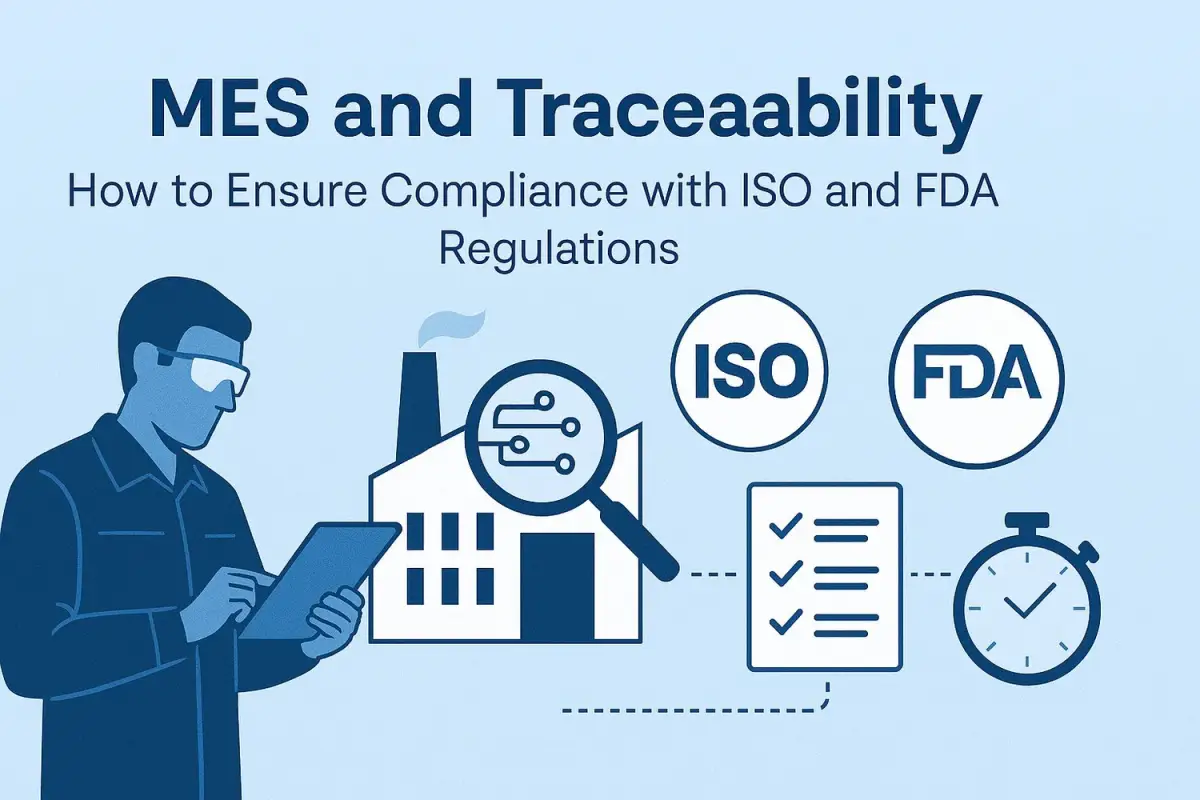
MES and Traceability: How to Ensure Compliance with ISO and FDA Regulations
Introduction
In industries where regulatory compliance is non-negotiable — such as pharmaceuticals, medical devices, food & beverage, and aerospace — ensuring full traceability throughout the production process is a must. From ISO standards to FDA regulations, companies are required to prove the who, what, when, where, and how of every product manufactured.
But how can businesses ensure this level of control, without compromising efficiency or flexibility?
The answer lies in a powerful digital ally: the Manufacturing Execution System (MES).
What is Traceability in Manufacturing?
Traceability is the ability to track and trace every component, process, operator, and machine involved in the manufacturing of a product. This includes:
-
Material traceability: origin, lot/batch numbers, expiration dates
-
Process traceability: steps performed, parameters used
-
Personnel traceability: who performed each action
-
Equipment traceability: which machines were involved and how they performed
Traceability isn’t just a tool for internal control — it’s a requirement for regulatory bodies like ISO (e.g., ISO 9001, ISO 13485) and the FDA (e.g., 21 CFR Part 11).
The Role of MES in Compliance
A Manufacturing Execution System enables manufacturers to collect, store, and organize all production data in real-time — creating a digital thread that connects every step of the process.
Here’s how MES helps ensure compliance with ISO and FDA regulations:
1. Real-Time Data Capture
MES automatically collects data from machines, sensors, and operators. This ensures:
-
Complete production records
-
Real-time monitoring of critical parameters
-
Immediate alerts on deviations or non-conformities
This supports FDA-compliant batch records and meets ISO requirements for documentation.
2. Full Traceability & Genealogy
MES enables end-to-end product genealogy, linking:
-
Raw materials → production steps → finished goods
-
Operators → machines → time stamps
This traceability is crucial during audits, recalls, or customer complaints.
3. Electronic Signatures & Audit Trails
With MES, electronic records and signatures are securely logged, enabling:
-
Compliance with FDA 21 CFR Part 11
-
Tamper-proof audit trails
-
Validation of user actions and approvals
4. Automated Documentation & Reporting
No more paper-based logbooks. MES systems automatically generate:
-
Batch reports
-
Non-conformity records
-
KPI dashboards
-
Audit-ready documentation
This reduces human error and supports faster, cleaner audits.
5. Controlled Workflows and SOP Compliance
MES guides operators through Standard Operating Procedures (SOPs), ensuring:
-
Consistent execution
-
Role-based permissions
-
Compliance with GxP and ISO process control standards
Real Business Benefits
Implementing MES for compliance brings more than just regulatory peace of mind:
✅ Reduced risk of non-compliance and penalties
✅ Faster audits and better inspection readiness
✅ Improved product quality and customer confidence
✅ Greater operational efficiency and data visibility
Final Thoughts
Compliance with ISO and FDA regulations is a serious responsibility — but it doesn’t have to be a burden.
A well-implemented MES not only ensures traceability and compliance but also drives continuous improvement, process control, and digital transformation.
👉 Want to learn more about how MES can support your industry-specific compliance needs? Let’s talk.
📩 Contact us at info@metalya.it to explore how Metalya can help you build smarter, compliant, and more connected operations.