
Computer Vision in Defense Electronics Manufacturing: AI Vision for Inspection of Insulation and Composite Materials
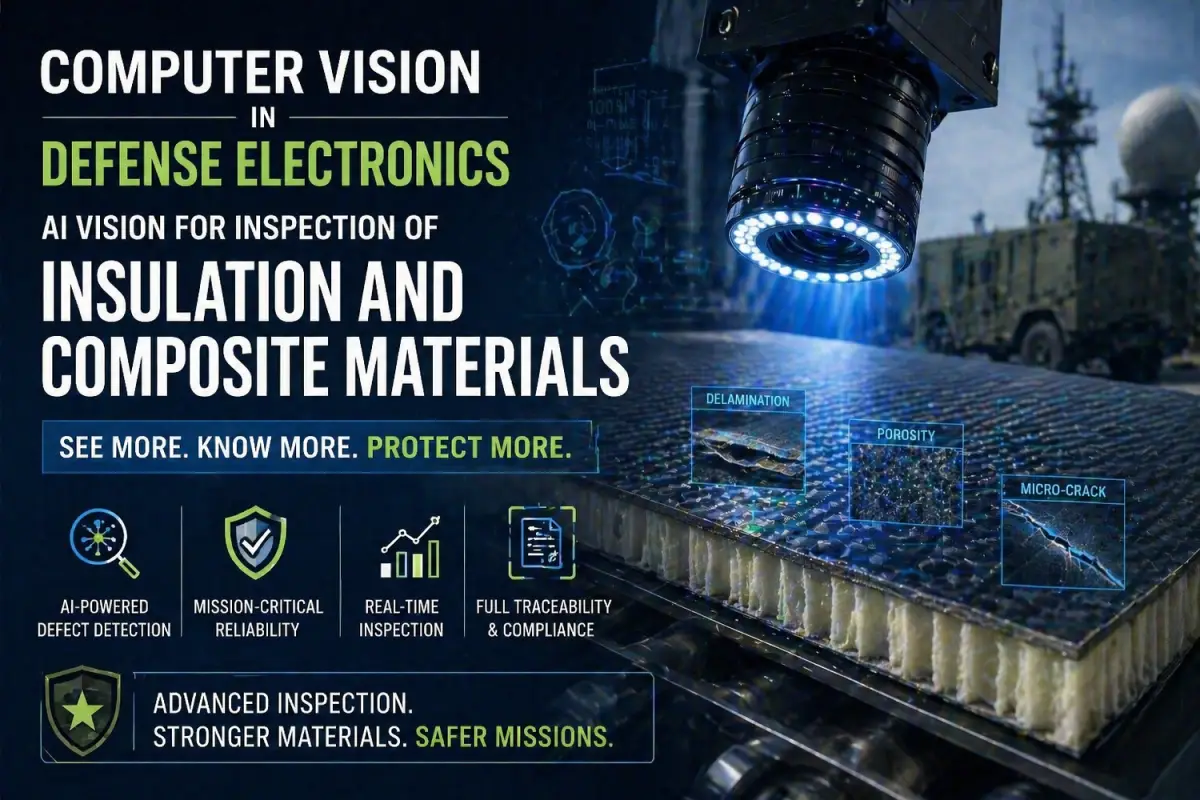
In the defense sector, material quality is not only about performance—it is essential for safety, durability, and resistance in extreme conditions. In particular, insulation materials and composites used in infrastructure, electronic systems, and military applications must comply with extremely strict standards.
These materials are often deployed in critical environments: operational bases, shelters, radar systems, electromagnetic shielding, and advanced structures. In this context, Computer Vision powered by AI (AI Vision) is a key solution to ensure advanced, automated, and reliable quality inspection.
The Role of Insulation and Composite Materials in Defense
Insulation and composite materials serve essential functions:
-
thermal insulation
-
electrical and electromagnetic insulation
-
mechanical strength
-
environmental protection
-
weight reduction
They are used in:
-
military infrastructure
-
advanced electronic systems
-
structural panels
-
protective coatings
-
communication and radar components
Their integrity is critical for system performance.
Critical Defects in Materials
During manufacturing and installation, defects may occur that are difficult to detect but highly critical.
The main ones include:
-
delamination in composites
-
voids and porosity
-
micro-cracks
-
bonding defects
-
inclusions or contamination
-
surface irregularities
These defects can compromise:
-
insulation performance
-
structural strength
-
long-term durability
-
operational safety
Limitations of Traditional Inspection Methods
Traditional techniques include:
-
manual visual inspection
-
destructive or semi-destructive testing
-
sample-based checks
These approaches present significant limitations:
-
difficulty detecting internal defects
-
operator subjectivity
-
long inspection times
-
high costs
-
lack of continuous inspection
How AI Vision Works
AI Vision systems combine Computer Vision and Deep Learning algorithms to analyze materials in an advanced way.
1️⃣ Data Acquisition
High-resolution cameras and advanced sensors capture images of materials.
These may include technologies such as:
-
thermal imaging
-
multispectral vision
-
3D scanning
2️⃣ Intelligent Analysis
Algorithms analyze images to detect anomalies.
The system can:
-
detect surface and internal defects
-
identify delamination
-
detect material inconsistencies
-
recognize abnormal patterns
3️⃣ Defect Classification
Defects are classified based on:
-
type
-
size
-
location
-
severity
This enables fast and accurate decision-making.
4️⃣ Integration and Traceability
Data is integrated with enterprise systems such as:
-
MES
-
quality systems
-
maintenance platforms
Ensuring full traceability and audit support.
Benefits of Computer Vision
Implementing AI Vision offers several advantages.
✔ High Precision
Detection of defects invisible to the human eye.
✔ Continuous Inspection
Real-time monitoring.
✔ Risk Reduction
Improved material reliability.
✔ Regulatory Compliance
Support for defense standards.
✔ Process Optimization
Data-driven production improvements.
Applications in Defense
These technologies are used in:
-
composite material manufacturing
-
military infrastructure
-
electronic systems
-
insulation coatings
-
advanced components
In all these areas, material quality is critical.
The Future: Intelligent Materials
With the evolution of AI, systems will become increasingly advanced.
Manufacturers will be able to:
-
predict defects before they occur
-
monitor materials over time
-
integrate digital twins
-
enhance predictive maintenance
Conclusion
In the defense sector, the quality of insulation and composite materials is essential to ensure safety, reliability, and performance.
Computer Vision powered by AI enables automated inspection, improving precision, traceability, and continuous control.
In an environment where every detail matters, investing in advanced technologies means reducing risks, improving processes, and ensuring high standards across all critical applications.