
Detecting Visual Contaminants and Foreign Objects in Production
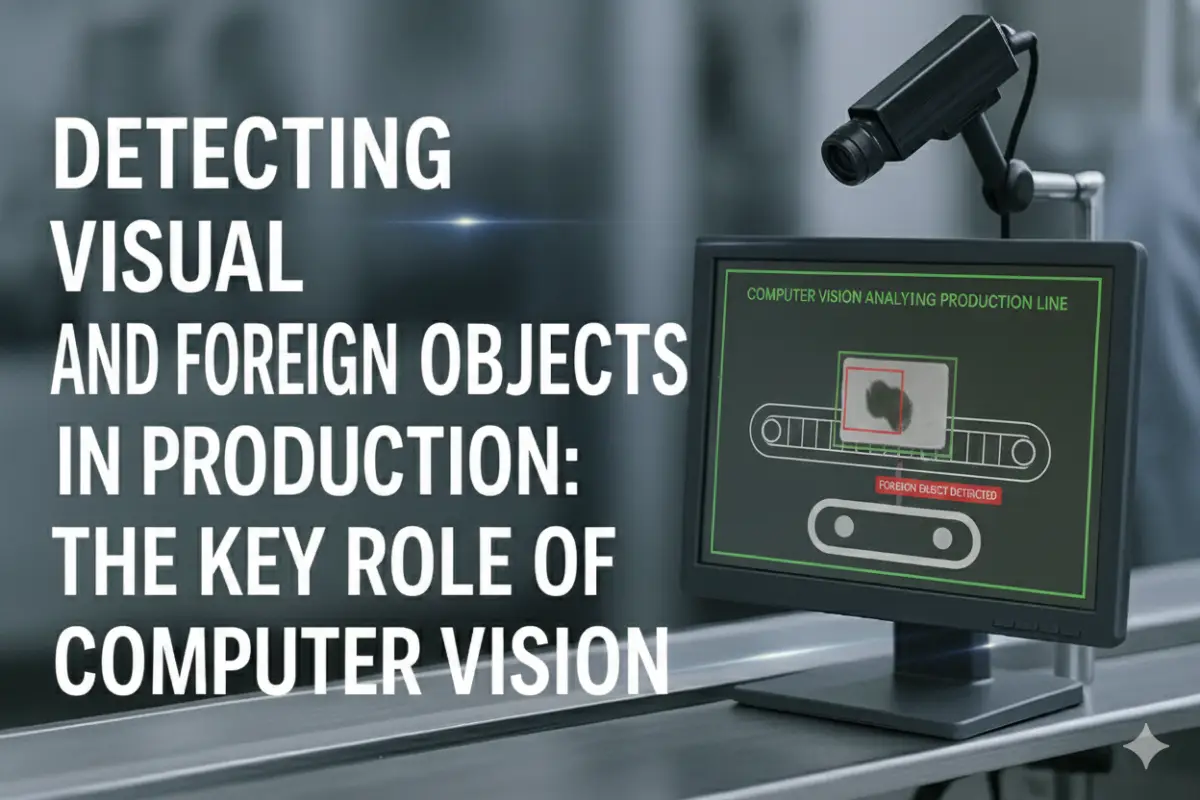
In the context of modern industrial production, quality is no longer just a competitive advantage but an essential requirement. The presence of visual contaminants or foreign objects in products can lead to waste, product recalls, reputational damage, and—especially in sensitive sectors such as food, pharmaceutical, and medical—serious risks to consumer safety.
In this scenario, Computer Vision applied to quality control represents one of the most effective technologies for automating and enhancing inspection processes.
The limitations of traditional quality control
Historically, defect and contaminant detection has relied on:
-
Human visual inspection
-
Manual sampling
-
Non-visual dedicated sensors
These approaches have clear limitations:
-
Human fatigue and subjectivity
-
Difficulty detecting small or rare defects
-
High costs at large production volumes
-
Limited traceability of detected defects
Computer Vision overcomes these issues by enabling continuous, objective, and fully traceable inspections.
What Computer Vision means for industrial quality control
Computer Vision uses industrial cameras, image processing algorithms, and Artificial Intelligence models to analyze production lines in real time.
Specifically for visual contaminant detection, these systems can:
-
Identify foreign materials (dust, fragments, insects, plastic, metal)
-
Detect abnormal variations in color, shape, or texture
-
Flag non-compliant products with high precision
How a contaminant detection system works
A typical industrial Computer Vision system consists of:
-
Image acquisition
High-resolution cameras, often combined with controlled lighting, capture images of products moving along the production line. -
Pre-processing
Images are enhanced (contrast, brightness, noise reduction) to facilitate accurate analysis. -
AI-based analysis
Machine Learning or Deep Learning algorithms compare incoming images with reference models to identify anomalies. -
Decision and action
The system triggers alarms, rejects products, or stops the line automatically when defects are detected.
Applications across industrial sectors
Food & Beverage
-
Detection of foreign objects in food products
-
Visual inspection of packaging
-
Prevention of cross-contamination
Pharmaceutical and Medical
-
Particle detection in blisters and vials
-
Visual sterility checks
-
Compliance with strict regulatory standards
Manufacturing
-
Identification of machining residues
-
Surface defect detection
-
Material purity inspection
Benefits of Computer Vision in quality control
Implementing Computer Vision solutions enables:
✅ Significant reduction in waste
✅ Greater inspection consistency and reliability
✅ Real-time inspection
✅ Full defect traceability
✅ Long-term operational cost reduction
Additionally, these systems enhance final product safety and reduce the risk of market recalls.
The future: smarter quality control
With the rapid evolution of Artificial Intelligence, Computer Vision systems are becoming increasingly:
-
Autonomous
-
Adaptive
-
Easy to integrate with PLCs, MES, and ERP systems
Their ability to learn new defects over time makes Computer Vision a strategic technology for the factory of the future.
Conclusion
Detecting visual contaminants and foreign objects in production is no longer an insurmountable challenge. Thanks to Computer Vision, manufacturers can transition from reactive quality control to proactive, intelligent inspection, ensuring high standards, improved efficiency, and maximum safety.
Investing in these technologies today means protecting the product, the brand, and the end customer.