
Full Factory Automation: The Role of MES in Smart Manufacturing
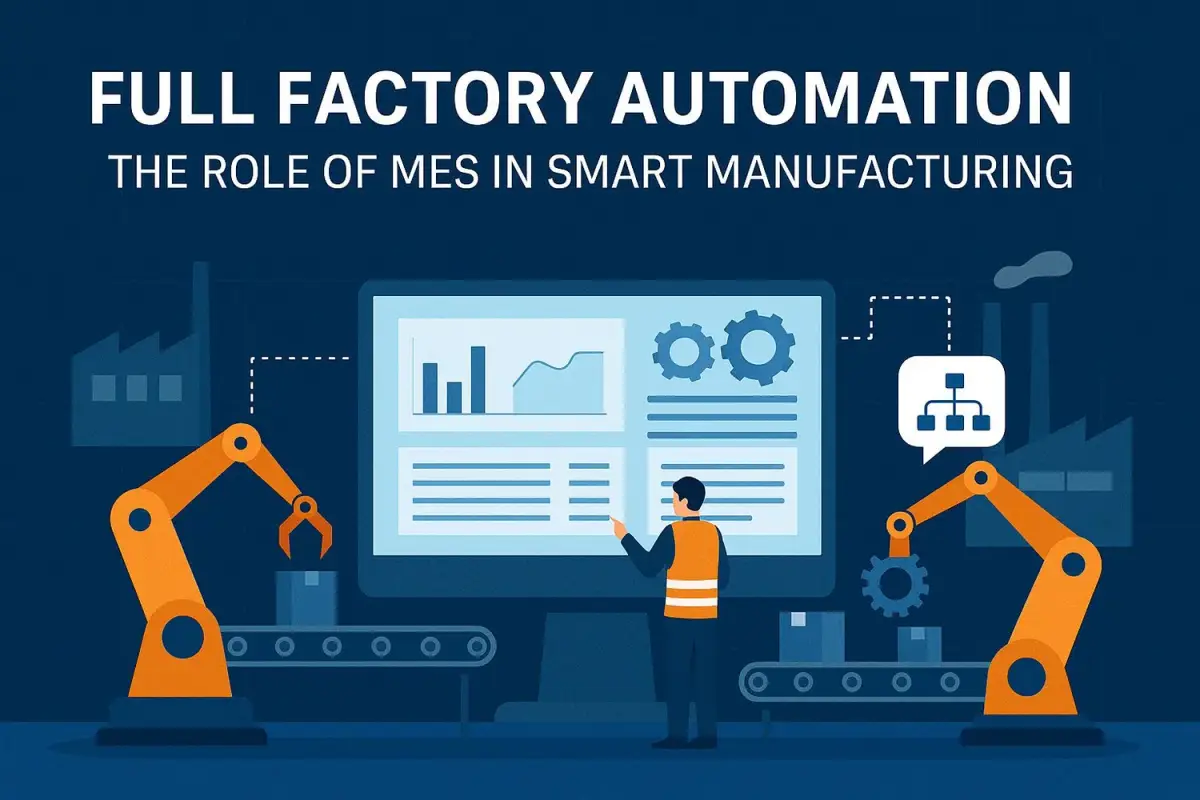
In recent years, the concept of Smart Manufacturing has transformed the industrial world. The integration of machines, people, and data is no longer a futuristic vision — it’s a reality many companies are already embracing. At the heart of this transformation is the Manufacturing Execution System (MES).
But what does it really mean to fully automate a factory? And how does the MES power this shift?
🔧 What is MES and Why It Matters
MES is a software system that connects, monitors, and controls production processes on the shop floor in real time. It sits between the ERP (Enterprise Resource Planning) and the operational level, acting as a smart bridge between planning and execution.
A robust MES allows you to:
-
Collect real-time data from machines and operators
-
Track every phase of the production process
-
Optimize time, costs, and resources
-
Improve quality and compliance
-
Reduce waste and downtime
In short, MES turns the factory into a connected, intelligent, and responsive environment.
🤖 Full Automation Isn’t Just About Hardware
When we talk about automation, people often think of robots, mechanical arms, or AGVs. But true automation also happens — and perhaps most critically — in the flow of information.
A fully automated factory is one where:
-
Machines receive instructions directly from the MES
-
Work orders are generated and assigned automatically
-
Operators are guided step-by-step with digital interfaces
-
Waste and defects are detected and analyzed in real time
-
Every piece of data is tracked, stored, and used to improve processes
In this sense, the MES is the operational brain of the smart factory.
🔄 Integration is the Key to Real Value
A modern MES doesn’t live in a silo. It must seamlessly integrate with:
-
ERP systems (e.g., SAP, Oracle, NetSuite, IFS)
-
PLCs and SCADA systems
-
Quality and maintenance tools
-
Business Intelligence and analytics platforms
This level of integration provides a centralized and real-time view of production, which is essential for making data-driven decisions.
📈 Real Business Benefits
Companies that implement MES as part of their smart manufacturing strategy can expect tangible results:
-
20–30% improvement in operational efficiency
-
Significant reduction in downtime and setup time
-
Better quality control and full traceability
-
Increased flexibility in managing customized and complex orders
-
Improved sustainability by reducing energy use and material waste
🚀 Final Thoughts: The Future Is Now
Achieving full factory automation is a journey — but one that is no longer optional for companies looking to remain competitive. MES is a critical enabler of this transformation.
It’s not just a piece of technology — it’s a strategic lever for innovation, growth, and operational excellence.
Want to discover how MES can transform your factory? Get in touch at info@metalya.it for a free personalized demo!